
By Team BuzzBizzAI
21 Jan, 2026
Generative AI has moved beyond the demo phase. In 2026, the most impactful marketing tools are not the ones making the loudest promises but the ones solving real problems: scaling creative output, protecting brand reputation in AI search, and automating performance media without constant oversight.
Three platforms stand out for their depth, adoption, and integration into actual workflows. They are not speculative. They are live, publicly available, and already shaping how teams operate.
Adobe GenStudio: Creative Automation With Guardrails
Adobe GenStudio is not another image generator. It is a governed creative engine built into Adobe Experience Cloud. Marketers upload approved logos, fonts, color palettes, and past campaign assets. The system then generates new ad variations across social, email, and display channels while enforcing brand guidelines.
Unlike open-ended AI tools, GenStudio operates within constraints. It remembers what your brand sounds like, what visuals are approved, and what messaging has performed well. This reduces the risk of off-brand outputs while accelerating production.
Public case studies from Adobe show teams cutting creative turnaround time by up to 40 percent. For enterprise brands managing global campaigns, this is not a luxury. It is a necessity. In 2026, expect more companies to demand AI that works inside brand rules, not outside them.
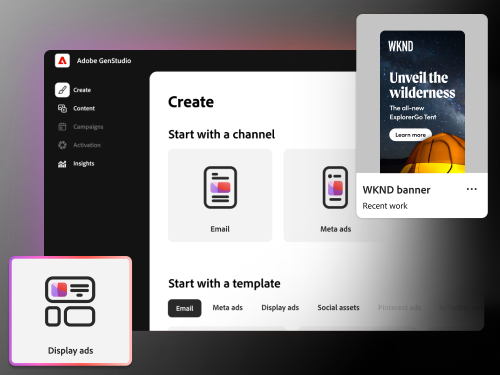
Image Source- Adobe GenStudio
Perplexity Enterprise: Visibility in the Age of AI Answers
People are no longer just searching Google. They are asking AI assistants direct questions like “Is Oatly actually sustainable” or “Which CRM is best for small businesses.” The answer they receive may come from a model trained on public data, with no guarantee of accuracy or balance.
Perplexity Enterprise addresses this shift by offering an AI search experience that cites its sources. Every claim links back to a press release, news article, earnings transcript, or official website. Marketers can see exactly how their brand appears in these answers and identify where misinformation takes root.
More importantly, brands can submit verified knowledge bases to influence future responses. This turns reputation management from a reactive game into a proactive one. As AI chat interfaces become primary discovery channels, this capability will only grow in importance.
Meta Advantage Plus Creative: Performance Media on Autopilot
Meta’s Advantage Plus Creative suite continues to gain traction among performance marketers. Advertisers upload a handful of images, videos, and text snippets. The system generates hundreds of combinations, tests them in real time, and automatically shifts budget toward the best performers.
Meta reports that advertisers using this tool see up to 18 percent lower cost per result compared to manual setups. Adoption is strongest in e-commerce, app marketing, and lead generation, where speed and scale outweigh creative nuance.
Critics point to risks of creative sameness and reduced control. But the results speak for themselves. In 2026, automation like this will become table stakes for any team running paid media at scale.
What This Means for Marketers
These three tools reflect a broader shift. AI is no longer a sidekick. It is infrastructure. The question is not whether you will use it, but how you will guide it.
Adobe GenStudio handles creative scale with discipline. Perplexity Enterprise safeguards brand truth in AI conversations. Meta Advantage Plus Creative drives performance through relentless testing. None replace human judgment. But all require marketers to think differently about control, oversight, and strategy.
In 2026, the most effective teams will be those who treat AI not as a magic button but as a system to be managed, monitored, and occasionally overruled.
Other Articles

No Comment! Be the first one.