
By Team BuzzBizzAI
21 Jan, 2026
There is something faintly magical about typing a few lines and watching a brand film appear on your screen, and Google Flow leans fully into that feeling. But is it really what it says it is? Or is it just the kind of sizzle one spreads to stay ahead in the race? Team BuzzBizz AI decided to stop theorising, roll up our sleeves, and actually try it. We fed it prompts, pushed its limits, argued with its outputs, and watched it dutifully respond.
Flow invites you to describe a mood, a story, and a brand intention, then promises to turn those words into moving images. The idea is seductive in exactly the way technology often is: you type, you wait, and you half expect a cinematic masterpiece to pop out like toast.
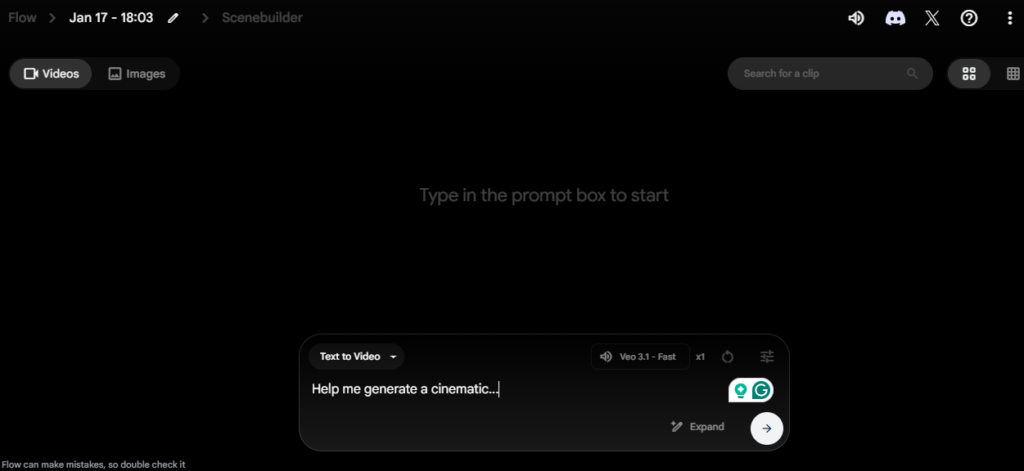
Image Source- Google Flow
Technically, Flow is a prompt-first video storytelling tool that converts language into structured narratives with pacing, visual continuity, and brand coherence. On paper, it sounds like the end of editing software as we know it. In practice, we found it works best when you treat it less like a magician and more like a sharp junior editor. You set the mood, sketch the sequence, clarify the brand tone, and Flow assembles scenes, transitions, and visual treatments that feel surprisingly consistent. For marketing teams juggling too many apps, this consolidation genuinely helps.
What works?
In our testing, Flow’s standout strength was narrative logic. Unlike many video generators that feel like a collage machine, Flow understands structure. It keeps a clear beginning, middle, and end, and maintains visual themes across scenes so the story feels deliberate rather than patchy. The prompt interface is clean, and iteration is fast. We could nudge tone, adjust pacing, or reshape the arc without rebuilding everything from scratch, which made experimentation far less painful.
What does not work?
It can be frustratingly literal. When our prompts were vague, the output became predictable. Genuine creative surprises were rare unless we deliberately pushed the system off-script. We also found advanced stylistic control limited, which would likely irritate experienced video editors who want finer creative control.
What we learnt?
After multiple tests, Team BuzzBizz AI concluded that Google Flow is powerful, but it rewards intention more than imagination. Treat it as a narrative co-pilot, not a director. The bigger takeaway is encouraging: prompt-to-video tools are clearly getting better at storytelling. Still, they need human taste to avoid turning every brand film into a beautifully polished, slightly robotic montage.
In short, Flow can help you tell your story faster. It just cannot decide what that story should be for you.
Other Articles

2025 Wrapped: Where AI Went From ‘Novelty’ to ‘Necessity’
Best AI Marketing Certifications to Add to your Portfolio

No Comment! Be the first one.