
By Team BuzzBizzAI
21 Jan, 2026
Remember Clippy and Merlin from MS Office? While no office assistant will ever reach their level of cool and whimsy, AI has widely enhanced the functionality of tools like that.
The virtual brand assistant has officially moved past the “cute chatbot” phase and into something more serious: a customer-facing employee who never sleeps, never takes a lunch break, and will absolutely say the wrong thing if you let it improvise.
The best tools in this category separate themselves in one way. They do not just answer questions. They maintain brand voice while staying useful, accurate, and calm under pressure. That is harder than it sounds.
Intercom Fin: Best for brand-consistent support at speed
Intercom’s Fin is one of the clearest examples of a support-first agent that understands it should sound like your company, not like a customer service horoscope. You can customize tone of voice, answer length, and identity details so the agent feels like a real extension of your brand.
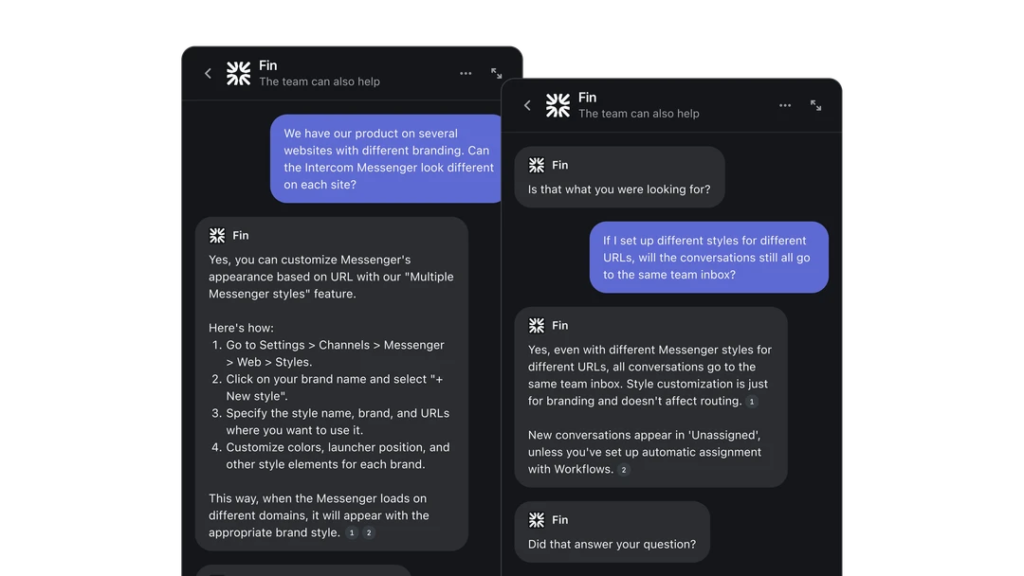
Image Source- Fin
Where it shines: Fast deployment, sensible brand controls, and a strong emphasis on consistency.
Where it can slip: Like most agents, it is only as good as the knowledge you give it. If your help center is messy, the assistant will politely inherit the mess.
Zendesk Advanced AI Agent: Best for structured CX teams
Zendesk leans into the reality that tone matters, and it provides explicit guidance and controls for personality, tone, and customization.
Where it shines: Practical tone frameworks for customer experience teams that want predictable behavior and fewer surprises.
Where it can slip: Getting it truly brand-specific can take work. You need someone who enjoys configuring systems, or at least does not fear settings menus.
HubSpot Breeze Agents: Best for marketing, sales, and service under one roof
HubSpot’s Breeze positions brand voice as a platform feature, not an afterthought. It can analyze your writing style, apply it to content, and even let customer agents adopt your configured brand voice.
Where it shines: Great for teams already living inside HubSpot who want a single place for marketing, sales, and customer conversations.
Where it can slip: As with any “all-in-one,” depth varies by use case. It is strong for broad workflows, less ideal if you need highly specialized support logic.
Salesforce Agentforce and Einstein Copilot: Best for enterprise orchestration
Salesforce frames its assistant as something embedded across apps that can answer questions and take actions, with marketing-specific copilots grounded in brand voice and customer data.
Where it shines: Enterprise-grade integration and the promise of consistent experiences across a massive customer platform.
Where it can slip: Implementation and governance can be heavy, and you will feel it.
If you want a virtual brand assistant that actually protects customer experience, choose the tool based on three things: brand controls, knowledge grounding, and escalation design. Anyone can make a bot sound friendly. The real test is whether it stays on-brand when the customer is angry, the policy is complicated, and the truth is not in the first paragraph of your FAQ.
Other Articles

Why Ethical AI Marketing is No Longer Optional
2025 Wrapped: Where AI Went From ‘Novelty’ to ‘Necessity’

No Comment! Be the first one.