
By Team BuzzBizzAI
17 Jun, 2026
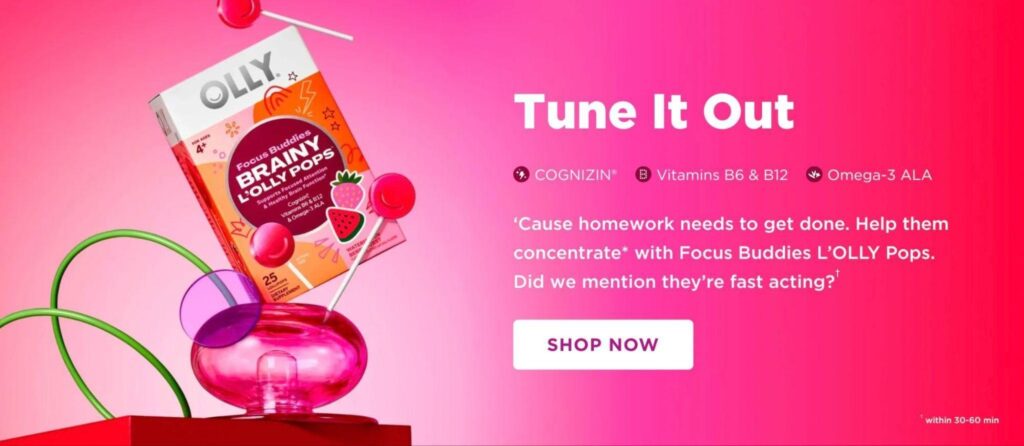
As ChatGPT and Gemini become the new front doors to product discovery, Olly is treating the humble product detail page as a conversion desk, education hub, and AI-readable brand witness.
The CMO Brief
- AI search is pushing shoppers deeper into the funnel before they reach your site.
- Product detail pages now need to explain, reassure, and convert in minutes.
- FAQs, ingredient explainers, and educational content are becoming AI visibility assets.
- Outdated third-party information can weaken how LLMs represent your brand.
- The new e-commerce brief is to build for human trust and machine readability at once.
The Case
E-commerce teams treated the homepage like the grand entrance to the brand mansion. It had the big message, the best photography, the seasonal campaign, and possibly a carousel.
Enter AI search. It has introduced a new revolving door, sending shoppers through the side door.
Supplement brand Olly is seeing that shift in real time. As more consumers ask ChatGPT and other AI platforms questions like “best sleep supplement” or “best women’s multivitamin,” shoppers are no longer always beginning at the top of the funnel. They are arriving on product pages with intent already in hand. A lot like when Google search results became a thing, but now more focusedly.
Jennifer Peters, Olly’s director of DTC, marketing technology, and digital compliance, told Modern Retail that visitors are spending less time browsing the site, yet converting faster. In plain e-commerce terms, they are arriving less like curious window-shoppers and more like people who have already interrogated a robot and would now like to see the label.
That changes the job of the product detail page. It can no longer be a neat shelf card with a button. It has to answer the questions AI has primed the shopper to ask.
What Olly Changed
Olly is updating its owned content for an AI discovery environment by strengthening educational blog posts and adding detailed FAQ sections to product pages. The focus is on explaining ingredients, efficacy and use cases in a format that is clear for people and legible for LLMs.
For example, when someone asks an AI assistant what to do about sleep trouble, Olly wants its Sleep gummies to appear as a credible answer. That means its product pages need to contain useful language around ingredients like adaptogens, zinc, and vitamins, rather than relying on charming packaging and the eternal ecommerce hope that people will “just get it.”
The brand is also reviewing third-party visibility. Peters said Olly rewrote its Wikipedia page after finding it had not been updated in about eight years. That detail sounds small until you remember that AI systems often build answers from whatever the open web gives them, which is how an ancient brand description can become a strangely durable ghost.
Olly is also using Contentsquare to identify friction on its site, including vague ingredient and solution descriptions. Its priority is the content it owns on its own domain, which is the sensible place to start, since even the most ambitious CMO cannot personally repair the entire internet before lunch.
The Results
The AI-readiness work is happening alongside broader product page improvements. Olly is making landing pages clearer for casual visitors, surfacing high-performing product recommendations earlier, sharpening “add to cart” calls to action and clarifying subscribe-and-save options.
Those checkout and product detail page updates have already paid off. According to Modern Retail, Olly saw a 20% month-over-month increase in website revenue earlier this year, along with a lift in average order value.
The bigger signal is not simply that the pages performed better. It is that Olly is treating PDPs as discovery infrastructure, not just conversion real estate.
Why CMOs Should Care
Adobe data cited by Modern Retail shows that AI-driven retail traffic increased 393% year over year in the first quarter of 2026. AI-prompted visits also showed retail revenue per visit 37% higher than non-AI traffic. A year earlier, non-AI visits were worth substantially more, which tells us the shopping journey is changing with unusual speed.
That should worry any brand whose product pages still behave like decorative catalogues.
The new customer journey may begin inside an AI answer, land directly on a product page and end in a decision within minutes. In that journey, the brand homepage becomes less like the front door and more like a very expensive room some people may never enter.
For CMOs, the lesson from Olly is clear: AI discoverability is not a gimmick to be chased with low-quality generated content. Peters says Olly is not publishing fake or hyper-personalised content to game AI traffic. The work is more grounded than that. Keep information accurate, keep product pages useful, build educational authority, update third-party sources and make every owned surface easier for both humans and machines to understand.
Because suddenly, e-commerce is not only about conversion. It is about being found, understood, and trusted before the shopper ever reaches your site.
Other Articles

Exposed! Ai Highlights the Mess Inside Brand Teams

No Comment! Be the first one.